Jeju Rental Car Requirements: International Visitors' Guide.
A practical guide for overseas visitors on how to rent a car and drive in Jeju Island.
Rental Car Pricing Advisory — new rules since 16 September 2026
Jeju now limits rental car discounts to a maximum of 60% off each company's officially reported daily rate. For example, a car reported at 100,000 KRW per day can't be offered for less than 40,000 KRW. Rentals longer than 10 days are excluded. Prices may vary less between peak and off-peak periods, so always check the current price and terms before booking.
There is also new information about damage waivers (optional cover that limits what you pay if the car is damaged) in the insurance section below.
Last updated: 21 September 2026. Details were accurate to the best of our understanding at the time of updating and may change without notice.
Why a Renting a Car in Jeju is a Great Way to Explore
Jeju is bigger than most visitors expect, around 1,850 sq km — roughly 73km east to west and 41km north to south. The island's most beautiful spots are scattered right across it, from the volcanic coastline of the east to the dramatic cliffs of the west, from the crater rim of Hallasan in the centre to the black lava fields of the south. Public transport exists, but it is slow, infrequent, and simply doesn't reach most of the places worth visiting.
For many visitors, a private tour with a local guide is the perfect solution — and there are some excellent options on the island. For those who prefer the freedom to set their own pace, stop more easily where they like, and explore on their own terms, renting a car in Jeju is the natural choice. Roads are well-maintained, traffic outside of peak season is generally manageable, and driving in Jeju is widely considered straightforward once you know what to expect. That said, long distances by road are to be expected for those trying to explore too much of the island in one day — in this regard we talk a little about the advantages of a two-base approach regarding accommodation elsewhere on our site.
This page covers much that you need to know: what documents you'll need, how the Jeju rental car process works at the airport, which companies are popular with international visitors, what to watch out for on the roads, and a few insider tips that will save you time and stress.
You may also be interested in a recent blog post how a local guide can help you make the most of your time on the island.

Please note that each rental car company will have its own rules and policies covering things like dash cam inclusion, early or late pickup and return options, refunds for excess fuel, and many other aspects of the rental. Many companies also offer benefits for booking directly through their website — including faster processing when you arrive to collect your car. Most of the well-known Jeju rental car companies have easy-to-navigate English-language websites, so it is worth exploring your options and reading the details carefully before committing.
What You'll Need to Rent a Car in Jeju — Documents Checklist
International Driving Permit (IDP)
This is non-negotiable in South Korea. Unlike some countries where an IDP is technically required but rarely checked, Korean rental companies will not hand over the keys without one. You must present both your home country driving licence and a physical IDP — digital copies should not be relied upon.
An IDP is straightforward to obtain before your trip through your country's relevant motoring authority. It typically costs the equivalent of $15–25 USD and is valid for one year. Apply well before your trip to allow for postal delivery.
Your Home Country Driving Licence
You must carry your original licence alongside your IDP at all times while driving. Both documents are required.
Passport
Required at the rental counter for identity verification and must match your IDP.

Credit Card
Required for the security deposit, which is typically held at 100,000–200,000 KRW (65-130 USD*)or more in some instances. The deposit is released on return. Most companies accept Visa and Mastercard. Some may not accept debit cards, so bring a credit card to be safe.
*USD equivalent approximate and subject to exchange rate variation.
Age Requirements
Rental car age requirements vary between companies and vehicle types. Many companies allow drivers from 21, provided they have at least one year of driving experience, but some require drivers to be 23 or 26 years old, particularly for certain vehicle categories. Some companies also apply a young driver surcharge to those under 25 — check the requirements of your chosen rental company before booking.
Collecting Your Rental Car at Jeju Airport
Most major rental companies operate just outside Jeju International Airport. The process is broadly as follows:
After collecting your luggage and exiting arrivals, head towards Gate 5 (outside the terminal). Cross the road and follow the signs for rental car companies. You'll find a shuttle bus area where each company runs its own bus to a nearby rental depot — look for company logos rather than names, as not all are written in English on the signage.
At the depot, take a queue number and wait to be served. Present your IDP, home licence, passport, and credit card. Before you drive away, photograph the car's condition carefully — any existing scratches or marks should be noted on your paperwork, as staff will inspect the car on return.
Staff will inspect the car on return.
Jeju Car Rental Companies Popular with International Visitors
Several car rental companies here in Jeju are consistently recommended by international travellers for their English-friendly service and straightforward processes. This is not an exhaustive list, and we have no commercial relationship with any of them — they simply come up repeatedly in traveller reviews. The details provided below should not be read as factual statements or the opinions of this website.
Lotte Rent-a-Car — One of the most widely used by international visitors. Offers good English support, a separate desk for foreign customers, and a solid range of vehicles including EVs. Has a large presence at the airport.
Orcar / Plus Rental — A tech-focused platform designed specifically for international travellers, with English booking, 24/7 chat support, and VIP airport pickup. Frequently recommended on travel forums and social media.
Rainbow Rent-a-Car — English-friendly staff and a clear rental process. Popular with first-time visitors and budget-conscious travellers. Flexible pickup and return times are a plus.
Tamra Rent Car — Another foreigner-friendly option with English support, transparent pricing, and a location close to the airport.
SK Rent-a-Car — Leans toward the premium end of the market with luxury and high-spec vehicles including SUVs and prestige cars.
Jeju One Car — A popular locally operated option, often slightly cheaper than the larger names and worth checking for availability.

Jeju car rental prices generally range from around 45,000 to 150,000 KRW (approx. 33–110 USD*) per day depending on vehicle type and company. Pricing is also in flux at the moment, as it will take time for Jeju's new discount rules to be fully implemented, so please treat these figures as a guide only. Booking in advance — especially during peak seasons (spring cherry blossom, summer, autumn foliage, and Korean public holidays) — is strongly recommended. If you're comparing Jeju car hire options online, check each company's own website as well as aggregators, since direct booking often comes with perks.
*USD equivalent approximate and subject to exchange rate variation.
Choosing the Right Car for Self-Driving Jeju

Solo travellers and couples — A compact or small car is usually more than sufficient. Easier to park, more fuel-efficient, and perfectly comfortable for Jeju's roads.
Groups of 3 or more — An SUV or minivan is advisable. Roads in some areas are narrow, and you'll want comfort and luggage space for longer driving days. If in doubt about whether your chosen rental car has enough room, confirm with your rental company before booking.
Electric vehicles (EVs) — Jeju has an extensive EV charging network, and the island is well set up for electric driving. However, international visitors occasionally run into issues at charging stations related to apps or local payment methods. Look for charging stations displaying the Green Environment Ministry logo — these allow payment directly by standard credit card without needing a local membership, however, such arrangements can be subject to change without notice; always check the latest information via official Korean travel and charging-service websites. If you rent an EV, ask the rental company for a thorough walkthrough and check whether they provide a charging card. Some companies have offered free charging promotions for foreign renters — worth asking about.
AWD / 4WD — Not generally required. Jeju's roads are well-paved, including routes up to Hallasan. A standard vehicle handles the terrain comfortably.
Rental Car Insurance in Jeju
Most rental companies include a basic level of insurance as standard, with the option to add a damage waiver (often called a Collision Damage Waiver, or CDW) that limits what you pay if the car is damaged. Since 16 September 2026, Jeju has standardised the two main types of damage waiver, so the terms should now be more consistent from one company to the next.
The two standard waivers:
- Standard waiver — up to 10,000 KRW per day (approx. 7 USD*). Covers damage costs up to 5,000,000 KRW (approx. 3,600 USD*).
- Premium waiver — up to 20,000 KRW per day (approx. 15 USD*). Covers exterior and bodywork damage in full.
Your maximum out-of-pocket amount. With either waiver, the rental company sets the amount you pay after an incident, but it cannot be more than 500,000 KRW (approx. 360 USD*).
Downtime fee. While a damaged car is being repaired, the company can't rent it out and may charge a fee for that lost rental income. With the standard waiver this can be up to 50% of the daily rate for each day the car is out of service. The premium waiver removes this fee.
When you book, check which waiver your quote includes, what your out-of-pocket amount would be, and whether a downtime fee applies.
Some credit cards include car rental CDW as a benefit. Check your card's terms carefully before your trip if you plan to rely on this. Note that Korean rental companies may decline to process a claim through your credit card's coverage — confirm the rental company's policy in advance.
Photograph the car thoroughly on collection and return, regardless of your insurance level- this is in case of any disputes that may arise over marks or other damage.
*USD equivalents approximate and subject to exchange rate variation.
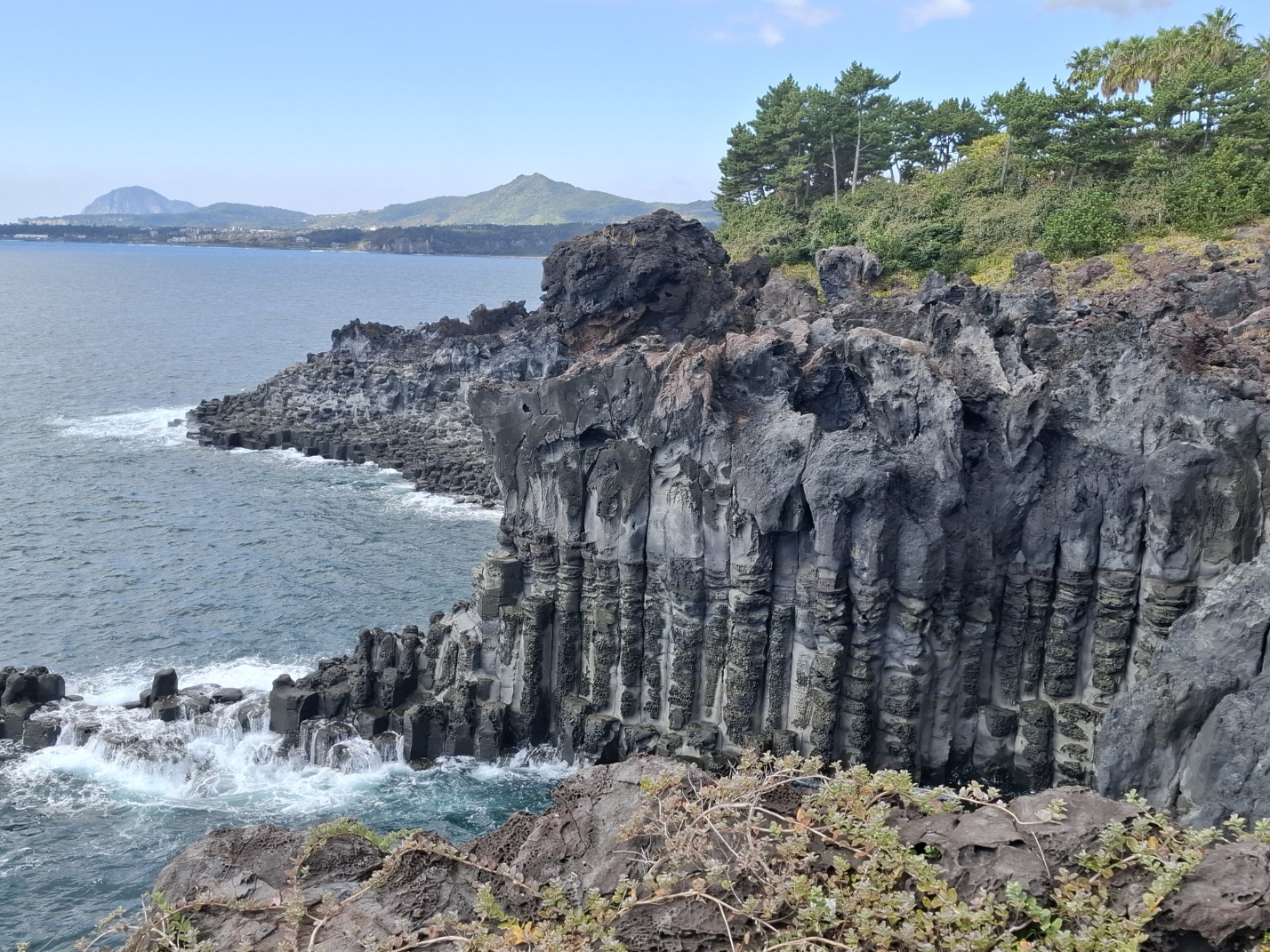
Driving in Jeju — Road Rules, Tips, and What to Expect
Drive on the Right
In Korea, traffic drives on the right-hand side of the road, with the steering wheel on the left side of the car. For visitors from the UK, Ireland, Japan, Australia, and other left-hand-drive countries, this will feel unfamiliar at first. Take extra care in the early part of your first driving day, particularly at junctions and roundabouts. Having a passenger navigate is a real help during the adjustment period.
Speed Limits and Speed Cameras
Speed limits are strictly enforced across Jeju, and speed cameras are everywhere — more than most visitors expect. Do not assume that light traffic means it is safe to exceed the limit.
General speed limits to be aware of:
- Residential and urban roads: typically 50–60 km/h
- Main roads and highways: typically 70–80 km/h
- Silver Zones (senior protection zones) and school zones: 30 km/h

Silver Zones are particularly important to know about. Jeju has a large number of them — more than most visitors anticipate — and the speed limit drops sharply to 30 km/h. Many rental cars have in-car alerts that warn you as you approach a camera zone. Pay attention to them. Fines for speeding are issued automatically by camera and may be subsequently charged via your rental company.
Roads and Navigation
Jeju's road network is good. The coastal road (Route 1132) circles the entire island and is well-maintained. Inland roads and routes up towards Hallasan are also paved and accessible by standard vehicle.
That said, journeys in Jeju take longer than you might expect from looking at a map. Speed limits are low, there are many traffic lights even on seemingly open roads, and some scenic coastal routes are winding. Build extra time into your days, especially if you're planning to cover a lot of ground.
A working GPS or navigation app is essential. Google Maps works well in Jeju, and KakaoMap (the dominant Korean navigation app) is excellent and available in English. A useful tip: in Jeju, searching by phone number rather than place name often works better for finding specific attractions and restaurants — it's worth asking your rental company to demonstrate this on the in-car GPS before you drive off.

Roundabouts
Jeju has a number of roundabouts. Traffic already on the roundabout generally has right of way, although caution is required as some drivers may not wait before entering the roundabout. If navigation is guiding you through one, count the exits rather than relying solely on voice instructions to avoid missing your turn.
Parking
Parking in Jeju is generally plentiful and free, particularly outside of Jeju City and Seogwipo and away from peak tourist seasons. Major attractions typically have car parks. In town centres, some paid parking operates — follow the signage. Note that some Airbnb and guesthouse properties have underground mechanical parking systems that require a passcode or remote — confirm with your host before arrival.

Fuel
Most rental cars run on petrol or diesel. Depending on your rentral car companies fuel policy (ask staff to confrim) refuel before returning your car — rental companies can charge a premium if they have to refuel on your behalf. Petrol stations are widely available across the island. If you're renting an EV, ask for a walkthrough of the charging process before you leave the depot, and request that the in-car GPS be switched to English voice guidance.
Driving Style
Jeju's roads feel calm and safe compared to many cities. Local drivers are generally courteous. Traffic in Jeju City and Seogwipo can be heavier during peak hours, but nothing like Seoul. Outside the main towns, the roads are often quiet and driving is relaxed. Speed bumps are common in residential areas and near attractions — slow down.
A Note on Child Safety Seats
Child seats are required by Korean law for children under 6 years old. Most rental companies offer them as an add-on — book in advance to ensure availability.