Driving in Jeju Island: Rules & Practical Tips
Essential advice for visitors driving in Jeju. Get key details on speed cameras, enforced zones, navigation apps, route times, & insider tips.
Driving in Jeju is straightforward, scenic, and generally relaxed. Renting a car is widely considered the best way to explore the island at your own pace, giving you the freedom to reach hidden coastal spots, quiet villages, and mountain trails.
This resource covers essential road rules, speed enforcement zones, navigation apps, route timing, and insider tips to help you navigate Jeju confidently.
Last updated: November 2026. Details reflect road, driving, and other regulations, as understood, at the time of writing and may change without notice. Always verify current regulations and undertake your own due diligence to confirm accuracy.
1. Navigating Coastal Roads
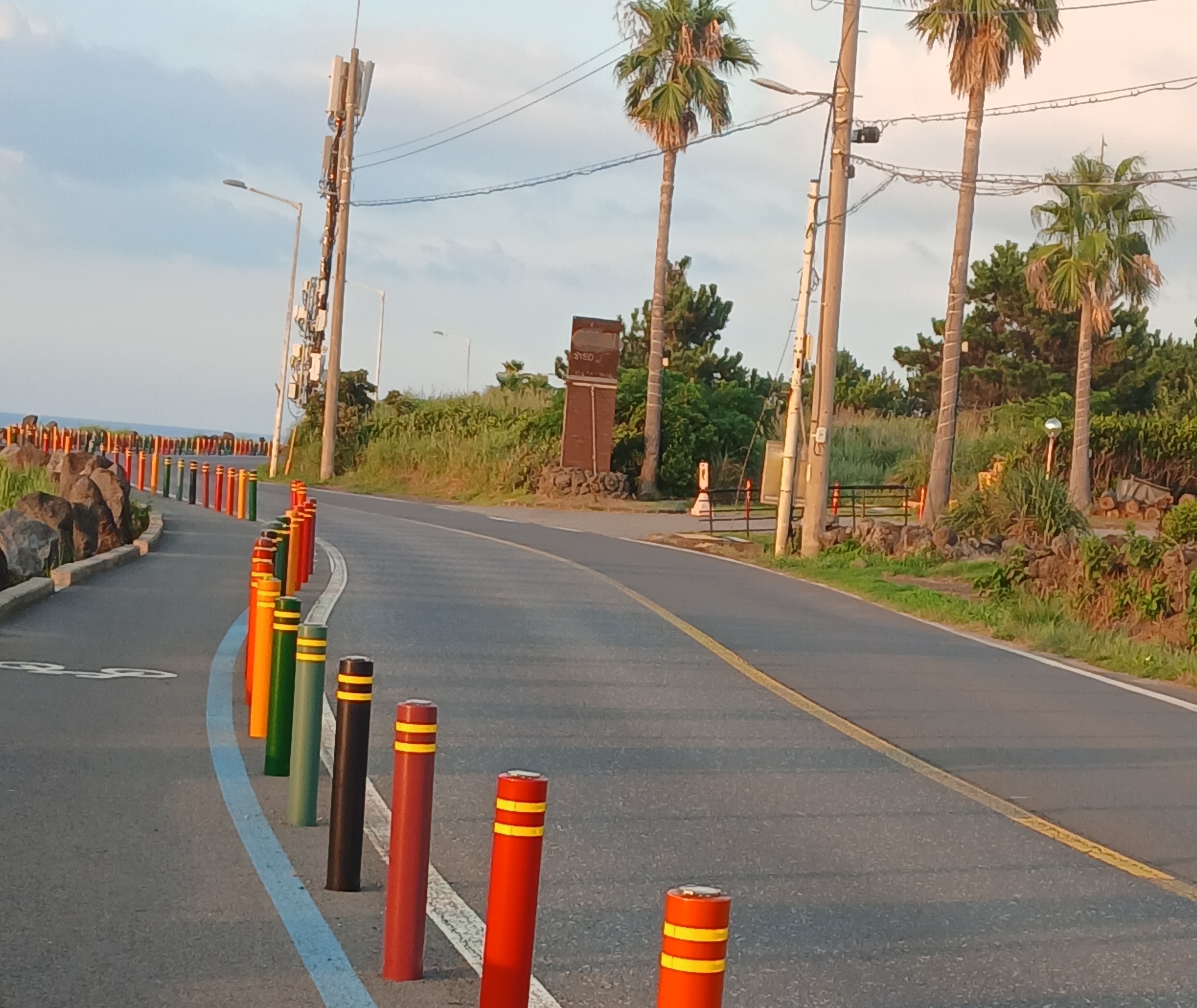
Jeju’s coastal routes offer spectacular ocean views, but they also feature shared lanes, narrow stretches, and scenic stops.
- Enjoying the scenery safely: If you’d like to take in the views or snap photos, pulling over at a designated viewpoint, café parking lot, or turnout is the easiest option rather than slowing down in live traffic lanes.
- When traffic builds up behind you: If you find other vehicles traveling close behind you while you enjoy the drive, there is no need to feel pressured or speed up beyond your comfort level. When convenient, simply signal early, pull into a designated turnout or safe parking area, and let them pass.
- Pedestrians and cyclists: Coastal routes frequently feature dedicated bicycle and walking tracks. Stopping or idling on these designated paths—even briefly for photos or to take a phone call—is prohibited by traffic regulations. If you need to pause, always use a designated parking lot, viewpoint, or paved turnout. In emergencies or to avoid immediate road hazards, pull as far out of the live lane as safely possible while yielding right-of-way to pedestrians and cyclists.
- Night driving along the coast: Some coastal stretches have limited street lighting, making pedestrians or cyclists in dark clothing harder to spot. Easing off your speed when streetlights end gives you more time to react if you should need to.
2. Driving Through Villages and Rural Areas
When driving through Jeju’s smaller villages and residential neighborhoods, expect a slower, more relaxed pace—along with a few unique road conditions.
- Strict 30 km/h zones: Many village areas and school zones carry strict 30 km/h speed limits to protect children and elderly residents. These zones are actively monitored by speed enforcement cameras.
- Bends and narrow village roads: On narrow village roads and around sharp bends, space can be tight—especially if passing larger vehicles or farm equipment. Reducing your speed slightly when approaching blind curves helps maintain plenty of clearance.
- Unpredictable village traffic: Keep an eye out for slow-moving farm machinery, delivery vehicles, scooters, e-bikes, and residents walking along the roadside.
3. Cross-Island Routes & Mountain Driving
Traveling between Jeju City in the north and Seogwipo in the south offers a choice between fast expressway-style highways and scenic mountain passes.
- Main Cross-Island Express Highways: For the quickest and easiest drive to the south, use Pyeonghwa-ro (Route 1135) toward Jungmun or Beonyeong-ro (Route 97) toward the east. These are wide, multi-lane routes designed for smooth, direct travel.
- Scenic Mountain Routes: Crossing through Jeju’s interior over Mount Hallasan via 1100 Road (1100-ro) or 5.16 Road (516-ro) offers beautiful forest canopy drives, but these routes are winding and two-laned with frequent twists.
- Dynamic microclimates: Weather at higher elevations can differ drastically from the coast. Clear, sunny skies at sea level can quickly change to thick fog, heavy rain, or cooler temperatures along mountain passes.
- Winter conditions (Dec–Feb): Snow, black ice, and heavy fog frequently impact higher-elevation passes like 1100 Road. During winter weather, police may require snow chains or temporarily close mountain routes. Taking lower coastal highways or major routes like Pyeonghwa-ro is often the safer option in winter.
- Drive at your comfort level: If taking mountain roads, maintain a steady pace suitable for visibility. Use designated turnouts or parking spots if you wish to allow faster local traffic to pass safely.

4. Recognizing Vehicle Types and Driving Signals
Understanding vehicle markings and driving habits will help you read the road better.
- How to Spot a Rental Car: Rental vehicles in Jeju are easy to identify either by rental company stickers on the body or by the middle Korean character on their license plates: 하 (Ha), 허 (Heo), or 호 (Ho). Drivers in rental cars are often unfamiliar with local routes and may occasionally display unexpected driving behavior.
- Give Other Drivers Extra Space: Vehicles driven by visitors may slow down or hesitate while looking for turns or following GPS prompts. Maintaining a generous trailing distance gives everyone room to react.
-
Traffic Flow at Turns and Junctions: Standard right-of-way rules apply at intersections, but local driving dynamics can differ from what you expect.
💡 Insider Tip: Trailing Vehicles at Junctions A unique local driving habit in Jeju is that a second car will sometimes follow immediately behind a lead vehicle turning across oncoming traffic or entering a junction, rather than stopping to wait for a separate gap. Being prepared for trailing drivers to proceed with the lead car helps avoid surprises.
-
Hazard Lights as Communication: Beyond signaling emergencies, hazard lights play a major role in everyday road communication across Korea.
💡 Insider Tip: Multi-Purpose Hazard Flashes Drivers frequently flash their hazard lights briefly to say "thank you" when allowed to merge, or as an advance signal to traffic behind them that cars ahead are slowing down rapidly. On Jeju, some drivers also switch on their hazard lights while driving through heavy rain or light fog, particularly on highway stretches.
5. Speed Cameras, Bumps, Crossings and Intersections
- Speed Cameras: Fixed overhead gantries, mobile tripods, and average-speed enforcement zones are widespread across Jeju. If recorded speeding in a rental car, the fine is processed through your rental provider, who will bill your credit card (often adding an administrative fee) after your trip.
- Speed Bumps: Standard speed bumps are frequent in residential areas, school zones, and approaching major intersections to manage vehicle speeds.
-
Road Surface Hazards: In addition to standard bumps, keep an eye out for wide speed platforms on connecting roads.
💡 Insider Tip: Low-Raised Speed Platforms Watch out for low-raised asphalt platforms—wide, multi-meter stretches that elevate the road slightly to act as extended speed bumps or pedestrian crossings. Because they sit low and their paint markings can often be faded, they are easy to miss. You will often encounter these on 30–50 km/h connecting roads, so watch the road surface carefully when transitioning from faster stretches.
- Intersections and Right Turns on Red: Under South Korean traffic laws, you MUST come to a full stop before making a permitted right turn at a red light. Always yield fully to pedestrians crossing or preparing to cross. If a dedicated right-turn arrow light is present, you must wait for the green arrow before proceeding.
-
Pedestrian Crossings: Under South Korean law, drivers are strictly required to stop before a crosswalk whenever a pedestrian is crossing or waiting on the curb intending to cross.
💡 Insider Tip: Approaching Pedestrian Crossings While South Korean law strictly requires stopping for pedestrians waiting at the curb, local driving habits in practice often differ. Unless someone has physically stepped into the lane, drivers behind or beside you may likely continue through without stopping. Always yield to pedestrians as required, but avoid abrupt braking—ease off early, check your mirrors, and give a quick flash of your hazard lights so trailing drivers know you are slowing down.
-
Roundabouts: Traffic moves counterclockwise. Officially, circulating traffic inside the roundabout has the right-of-way.
💡 Insider Tip: Roundabout Realities While textbook rules state circulating vehicles have right-of-way, real-world habits vary. An oncoming driver inside the roundabout might unexpectedly slow down to yield to you, while another may enter right in front of you. Stay alert and watch actual wheel movement rather than assuming strict compliance.
6. Fueling Up & Avoiding Misfueling Hazards
Self-service gas stations (셀프 주유소) are common across Jeju. Because rental fleets feature a mix of gasoline, diesel, and LPG vehicles, confirming your exact fuel type before filling up is essential.
-
Korean Fuel Terms to Recognize:
- 휘발유 (Hwibalyu): Regular Gasoline / Petrol (Yellow Handle)
- 경유 (Gyeongyu): Diesel (Green or Black Handle)
- 고급휘발유 (Gogeup-hwibalyu): Premium High-Octane Gasoline (Red Handle)
- LPG: Liquefied Petroleum Gas (Requires dedicated LPG stations)
-
Helpful Phrases for Full-Service Attendants:
If stopping at a manned station in a diesel rental car, you can state:
- "이 차 경유예요" (I-cha gyeong-yu-yeyo) — "This car takes diesel."
- "휘발유 넣지 마세요" (Hwi-bal-lyu neo-ji ma-se-yo) — "Please do not put gasoline in it."
- What to Do If You Misfuel: If you accidentally pump gasoline into a diesel vehicle (or vice-versa), DO NOT START THE ENGINE OR TURN ON THE IGNITION. Leaving the engine off keeps the incorrect fuel contained inside the tank and prevents it from circulating into high-pressure fuel pumps and injectors. Alert station staff immediately and call your rental provider’s support line.
7. Practical Parking Advice
- Tight Spaces: Parking spaces in South Korea can be compact. Take extra care when opening doors, as space between vehicles can be tight.
- Turning Longer Vehicles: If renting a larger vehicle (such as a Kia Carnival or SUV), it is best to pull a little further straight out of your parking space before turning your wheel to help avoid scraping neighboring cars.
- 24/7 Dashcams ("Black Boxes"): Most Korean cars are equipped with front and rear dashcams that record continuously, including impacts while parked. Always report even minor parking scrapes or nudges to your rental provider.
8. Estimated Driving Times Across Jeju
Travel times vary based on traffic, weather, and seasonal peak periods (Beach season, Spring blossom, Chuseok, and Seollal). Use NAVER Map or KakaoMap for reliable GPS driving navigation (Google Maps offers limited driving directions in South Korea).
- Jeju Airport to Handam Coastal Trail (Aewol): 25 to 35 mins
- Jeju Airport to Hyeopjae Beach (Hallim): 40 to 50 mins
- Jeju Airport to Hamdeok Beach (North-East): 30 to 45 mins
- Jeju Airport to Seongsan Ilchulbong (Sunrise Peak): 65 to 80 mins
- Jeju Airport to Jungmun Tourist Complex: 55 to 70 mins
- Jeju Airport to Seogwipo City Centre: 60 to 75 mins
- Seogwipo City Centre to Jungmun Tourist Complex: 20 to 30 mins
- Seogwipo City Centre to Seongsan Ilchulbong: 55 to 70 mins
- Jungmun Tourist Complex to Hyeopjae Beach (Hallim): 55 to 70 mins
9. Minor Scrapes & Reporting Incidents
If you have a minor parking scrape or similar incident while exploring Jeju, you will need to follow the procedures required by your rental car provider. This will likely include contacting your rental provider's support hotline to notify them, however it is important that you ask the provider for their specific advice at the point you pick up your car. For help with insurance procedures and our printable phrase card, see our Rental Car Insurance section.
Dashcams & Parking Etiquette: Almost all vehicles in Jeju have 24/7 front-and-rear dashcams. If you accidentally bump a parked car and the owner isn't around, Korean law requires you to leave a note with your phone number under their wiper before moving on, that said however, once again always check your rental provider's guidance.
10. Major Accidents & Emergencies
We are unable to provide specific guidance in this area beyond reminding you to ask your rental car provider at pickup for their exact requirements in the event of a serious incident. While contacting your provider's support hotline is essential, immediate actions such as notifying emergency services may be required first.
Emergency Contact Essentials: If anyone is injured or traffic is severely obstructed, call local emergency services immediately (112 for Police, 119 for Fire/Ambulance). You can also dial 1330 for the 24/7 Korea Travel Hotline for free English translation assistance during an emergency.
For official emergency contact details, disaster advisories, and government travel assistance, please see the Visit Jeju Official Portal.
11. Official Resources & Traffic Law Information
For official regulations, updates on South Korean traffic laws, and island travel advisories, consult the following official portals:
- South Korean Road Traffic Act & Regulations: Consult the official guidance from the Korean National Police Agency (KNPA) and Road Traffic Authority (KOROAD).
- Jeju Island Visitor & Transport Information: Check real-time travel alerts and destination updates on the official VisitJeju Tourism Portal.
Please note that all content on this page is provided for general information only, and the insights shared above reflect personal observations from driving Jeju’s roads day to day rather than official legal or driving instruction. Road conditions and driver behavior vary, so you may or may not encounter every situation described—please take this guidance as intended. It remains solely your responsibility to read and adhere to your rental provider's policies, local traffic laws, and emergency protocols.